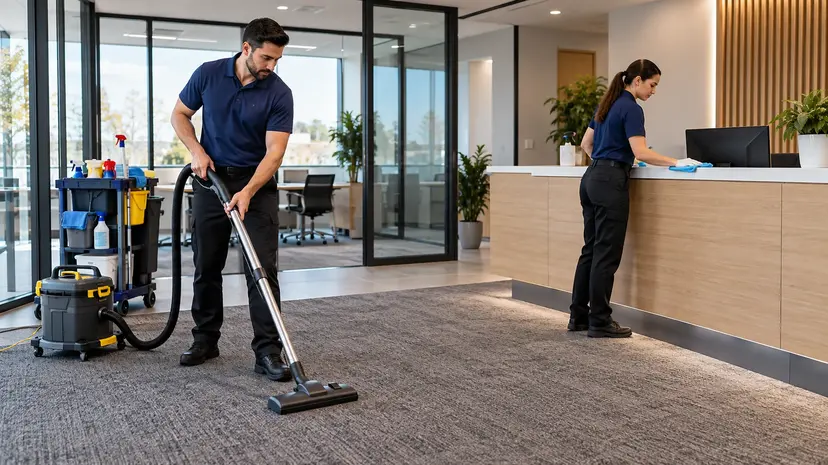
Keeping a commercial property clean takes more than an occasional sweep, a quick wipe of the desks, or emptying the garbage at the end of the day. Offices, retail stores, warehouses, and other business facilities need a consistent cleaning plan that accounts for daily use, foot traffic, washroom requirements, floor maintenance, and the expectations of employees and visitors.
Commercial janitorial services help businesses maintain that standard through scheduled cleaning and ongoing facility upkeep. The right program can make daily operations easier, help maintain the condition of workplace surfaces, and reduce the burden on employees who would otherwise have to manage cleaning tasks themselves.
For businesses in Kitchener, Waterloo, Cambridge, Guelph, London, and surrounding Southern Ontario communities, choosing a janitorial provider starts with understanding what needs to be cleaned, how frequently it should be done, and how the quality of the work will be maintained.
This guide explains what commercial janitorial services include, how to plan a cleaning schedule, what influences pricing, and what to look for when comparing providers. Businesses can also learn more about professional cleaning services from Red & White Cleaning Services to explore cleaning solutions for their facilities.
What Are Commercial Janitorial Services?
Commercial janitorial services are professional cleaning and maintenance services designed to keep business premises clean, orderly, and suitable for their intended use. They generally focus on recurring tasks rather than only providing a one-time deep clean. Businesses looking for a structured approach to workplace maintenance can explore commercial cleaning services to understand the available options.
Depending on the facility, a janitorial program may include:
Cleaning offices, reception areas, meeting rooms, and shared workspaces.
Sweeping, vacuuming, and mopping floors.
Cleaning and disinfecting appropriate high-touch surfaces.
Cleaning washrooms and replenishing agreed consumable supplies.
Cleaning kitchens, lunchrooms, and staff break areas.
Emptying garbage and recycling bins.
Dusting furniture, shelves, and accessible surfaces.
Maintaining entrances, corridors, and other common areas.
The exact scope depends on the building, its occupants, operating hours, cleaning requirements, and agreed service contract.
For example, a small professional office may need cleaning several times a week, while a busy commercial facility may require daily attention to washrooms, entrances, and high-traffic areas.
Commercial janitorial services are not limited to making a building look presentable. A well-planned program establishes clear responsibilities, suitable cleaning methods, and a repeatable schedule that helps a business maintain consistent standards.
What Do Commercial Janitorial Services Include?
A reliable cleaning plan begins with identifying the areas that require attention and specifying what should happen during each visit. This prevents misunderstandings about which tasks are included in the regular service and which require separate arrangements.
1. Office and Workspace Cleaning

Offices accumulate dust, fingerprints, food residue, and everyday debris through normal use. Workstations, meeting rooms, reception areas, and shared spaces need a cleaning routine that reflects how employees use them.
Common tasks include:
Dusting accessible furniture and surfaces.
Cleaning reception counters and meeting tables.
Vacuuming carpeted areas.
Sweeping and mopping suitable hard floors.
Removing garbage and recycling.
Cleaning accessible glass and interior partitions.
Wiping appropriate shared touchpoints.
Cleaning personal desks and electronic equipment should follow the client's instructions. Employees may need to clear their workstations, and sensitive equipment should only be cleaned using appropriate methods.
2. Washroom Cleaning and Restocking
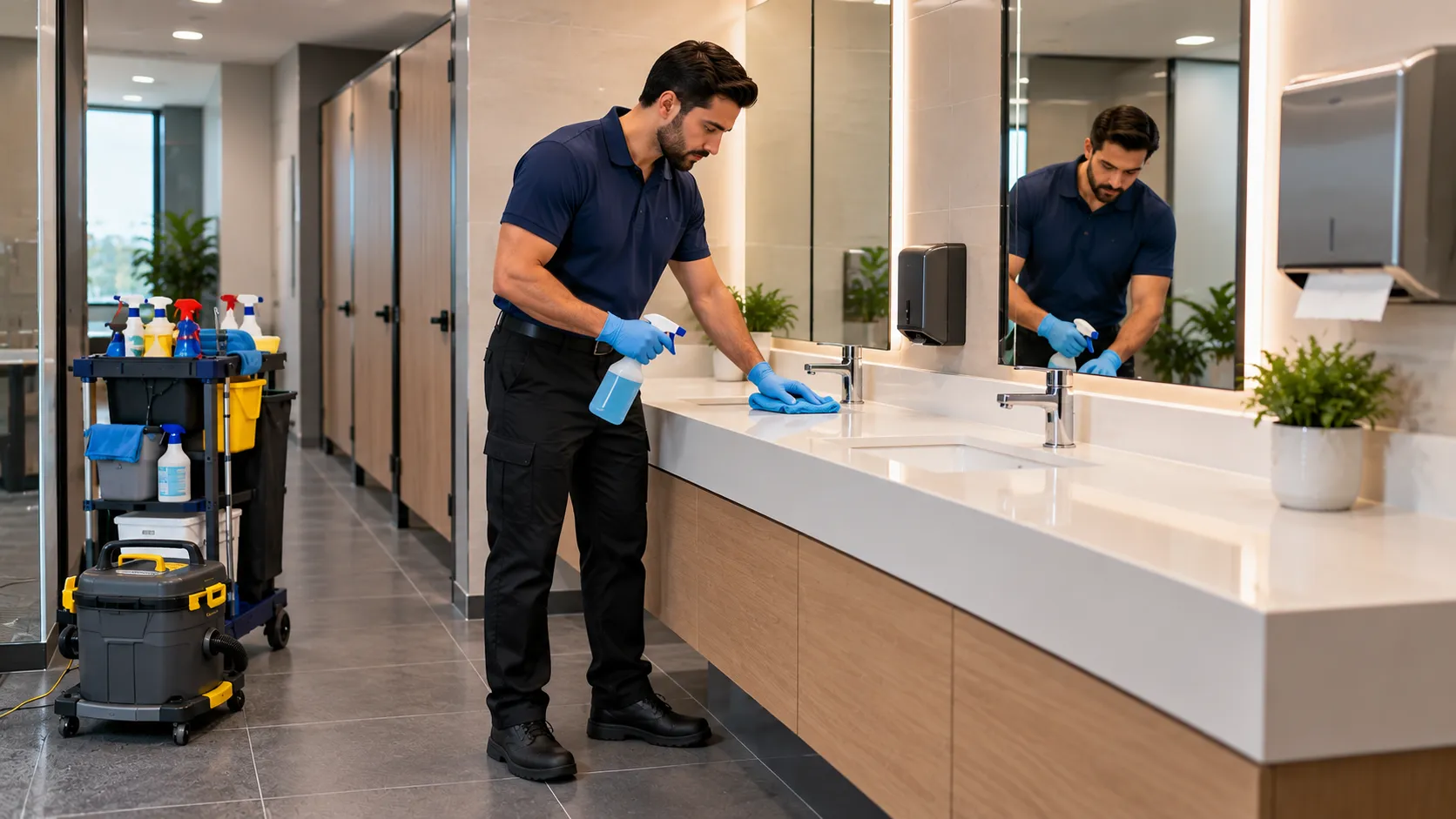
Washrooms require particular attention because they are used repeatedly throughout the working day.
A typical scope may include:
Cleaning toilets, urinals, sinks, and faucets.
Cleaning mirrors and accessible surfaces.
Cleaning floors and appropriate partitions.
Disinfecting designated surfaces according to product instructions.
Removing waste.
Replenishing agreed supplies such as soap, paper towels, and toilet paper.
The frequency of washroom service should reflect usage. A busy workplace may need more frequent checks than a small office with only a few occupants.
Supply restocking should also be defined in the agreement. Some contracts include the cost of consumables, while others charge separately for the products supplied.
3. Kitchen and Lunchroom Cleaning
Shared kitchens and breakrooms can quickly become untidy when several employees use the same facilities.
Janitorial tasks may include cleaning countertops, sinks, tables, appliance exteriors, microwave interiors where agreed, and floors. Garbage should be removed regularly, and food residue should be addressed using methods appropriate to the surface.
Businesses should establish clear expectations regarding refrigerators, dishes, personal food, and appliances. These tasks are not necessarily included in every commercial cleaning contract.
4. Floor Cleaning and Maintenance
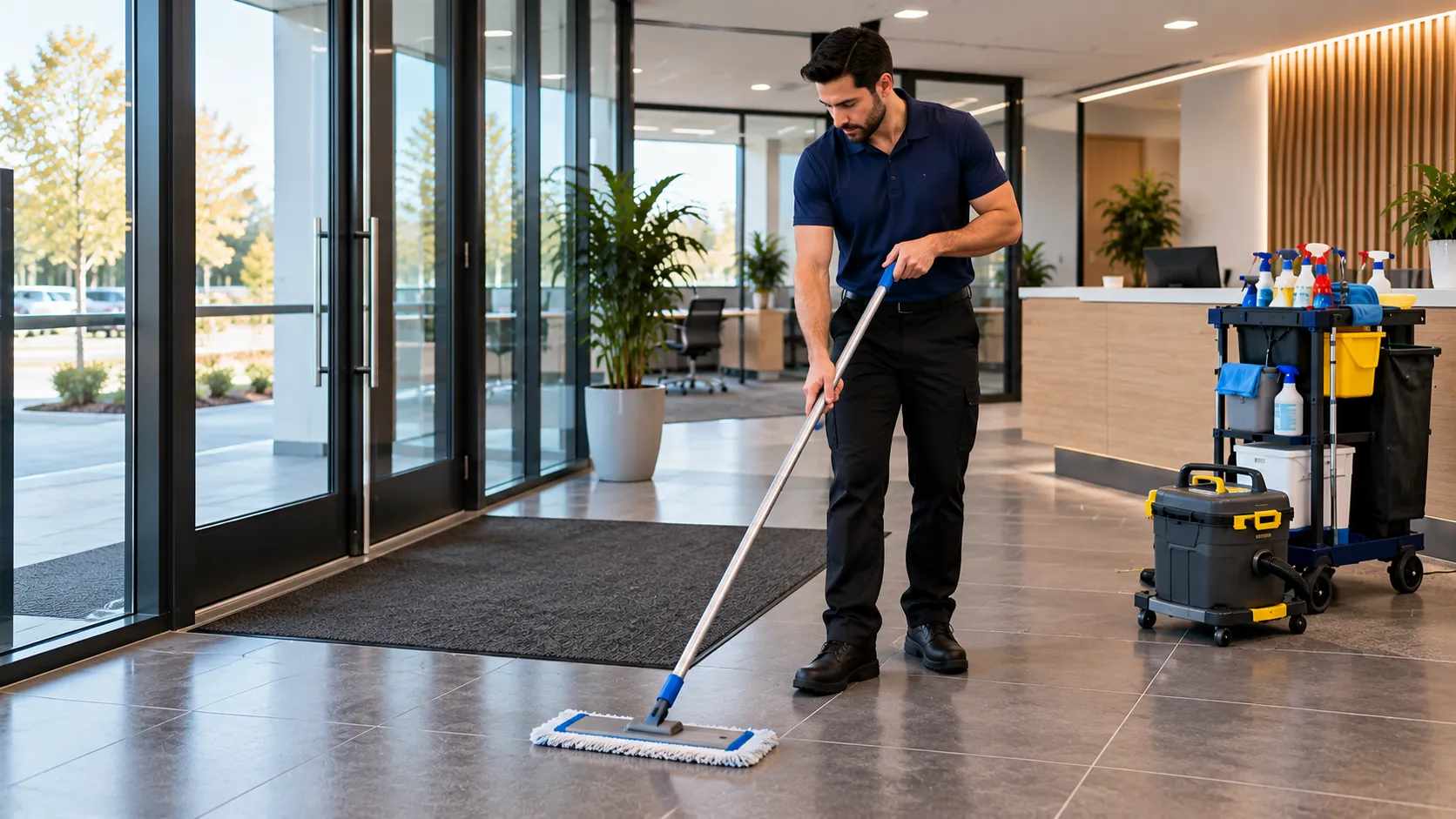
Floors often receive more daily wear than other interior surfaces. Dirt, moisture, grit, and seasonal debris can accumulate around entrances and high-traffic walkways.
Routine floor care may involve:
Vacuuming carpeted areas.
Sweeping and damp-mopping hard floors.
Cleaning entrance mats and accessible floor edges.
Addressing spills using appropriate procedures.
Periodic machine cleaning where the surface and scope require it.
Specialized services such as carpet extraction, floor stripping, refinishing, and intensive tile or grout cleaning may need separate scheduling.
The appropriate method depends on the flooring material, manufacturer's recommendations, soil level, and finish. Using the wrong cleaning method can damage some surfaces, so floor care should be planned rather than treated as a one-size-fits-all task.
5. Common Areas and Building Entrances
Lobbies, hallways, stairwells, elevators, and shared spaces influence how people experience a property.
A janitorial checklist may cover visible fingerprints, accessible surfaces, entrance floors, waste bins, and other agreed tasks. Entrances may require more frequent attention during wet or snowy weather because footwear can carry in water, grit, and road salt.
Businesses should identify areas where dirt builds up fastest and adjust their cleaning schedule accordingly.
6. Cleaning High-Touch Surfaces
Door handles, light switches, shared counters, and frequently used equipment may need regular cleaning and, where appropriate, disinfection.
Cleaning removes soil from surfaces, while disinfection uses a suitable product under its specified conditions to address microorganisms. These are related but different processes.
The cleaning provider and client should agree on which surfaces require disinfection, which products are appropriate, and how long a disinfectant must remain wet to meet its label instructions.
A blanket promise to disinfect everything during every visit is less useful than a documented plan that identifies the surfaces, products, and required procedures.
Which Businesses Benefit From Commercial Janitorial Services?
Cleaning requirements vary considerably between facilities. The best program reflects the way a building operates rather than relying on a generic list of tasks.
Facility type | Areas to assess | Important planning considerations |
Offices and professional workplaces | Workspaces, meeting rooms, washrooms, kitchens, floors | Employee occupancy, shared spaces, business hours |
Retail stores and showrooms | Entrances, sales floors, customer areas, washrooms | Customer traffic, presentation, opening hours |
Warehouses and distribution facilities | Office sections, staff facilities, floors, common areas | Operational schedules, traffic routes, site safety |
Medical offices | Waiting areas, offices, washrooms, designated clinical areas | Facility-specific procedures, approved products, applicable requirements |
Educational facilities | Classrooms, corridors, washrooms, shared spaces | Occupancy schedules, age-appropriate safety, high-use areas |
Gyms and fitness facilities | Reception, change rooms, washrooms, shared equipment areas | Moisture, odours, frequent contact, operating hours |
Multi-tenant commercial buildings | Lobbies, corridors, shared washrooms, common kitchens | Tenant expectations, shared responsibilities, access arrangements |
Specialized environments may require additional training, equipment, protocols, or approvals. Businesses should confirm that a prospective provider can meet those requirements before assigning work.
How Often Should a Commercial Facility Be Cleaned?
There is no universal cleaning schedule that works for every business. The appropriate frequency depends on occupancy, foot traffic, the type of activity taking place, the areas being cleaned, and the cleanliness standard the business wants to maintain.
A useful starting point is to divide tasks into daily, weekly, and periodic categories, then adjust the schedule after assessing the facility.
Daily or High-Frequency Tasks
Depending on usage, these may include:
Emptying waste bins.
Cleaning washrooms.
Addressing visible spills and entrance debris.
Cleaning frequently used kitchen surfaces.
Maintaining high-traffic floors.
Cleaning designated high-touch surfaces.
Checking and replenishing essential washroom supplies.
Some facilities may need certain tasks performed several times a day, while others may not need daily cleaning throughout the entire building.
Weekly Tasks
Depending on the routine scope, weekly tasks may include more detailed dusting, cleaning less frequently used areas, and giving additional attention to corners, edges, furniture, or fixtures that do not require daily service.
Weekly tasks should supplement, rather than replace, the routine cleaning required by the facility.
Monthly, Quarterly, or Periodic Tasks
Periodic work may include deep cleaning services for selected areas, detailed floor maintenance, carpet extraction, cleaning accessible high-level surfaces, or other specialized services.
The correct interval depends on the surface, traffic, soil accumulation, and manufacturer's guidance. Some facilities will need certain periodic services more often, while others may require them less frequently.
A Sample Commercial Janitorial Schedule
The following is an example for planning purposes, not a universal recommendation.
Task | Example frequency | What determines the schedule? |
Washroom cleaning | Daily or more frequently as needed | Occupancy and usage |
Waste removal | Daily or according to volume | Waste generation and hygiene requirements |
Entrance and high-traffic floors | Daily or as needed | Weather, foot traffic, and visible soil |
Office and shared-space cleaning | Several times weekly or daily | Occupancy and client expectations |
Detailed dusting | Weekly or as appropriate | Surface type and dust accumulation |
Carpet deep cleaning | Periodically | Traffic, carpet condition, and manufacturer guidance |
Intensive floor maintenance | As required | Flooring material, wear, and finish |
Comprehensive cleaning review | At agreed intervals | Inspection findings and service performance |
A walkthrough with the cleaning provider can help turn this starting point into a practical schedule. The final scope should state which tasks are performed during each visit and which are completed periodically.
What Are the Benefits of Professional Commercial Janitorial Services?
A professional janitorial program offers more than convenience. Its value comes from making routine cleaning predictable and aligning the work with the needs of the facility.
A Consistently Presentable Workplace
Regular cleaning helps prevent dust, waste, and visible soil from accumulating between visits. This is particularly useful for businesses that welcome customers, clients, tenants, or visitors.
A defined cleaning schedule also makes it easier to identify neglected areas before they become recurring problems.
Less Time Spent Managing Cleaning Tasks
Without an established cleaning arrangement, employees or managers may have to organize supplies, assign duties, arrange cover, and follow up on incomplete tasks.
An outsourced cleaning program can transfer agreed responsibilities to a service provider, allowing the business to focus more of its time on its normal operations.
Clearer Cleaning Standards
A written scope of work creates a common understanding of what a satisfactory clean looks like.
It can identify required tasks, service frequencies, access procedures, and the process for reporting issues. This is more reliable than assuming that the provider and client have the same expectations.
Support for Workplace Cleanliness
Routine cleaning removes dirt, dust, and other soil from appropriate surfaces. Targeted disinfection can be included where justified by the environment and the applicable procedures.
However, no cleaning program should promise that illness will be eliminated or that every surface will remain free of microorganisms. Results depend on the methods used, the environment, and how spaces are occupied and maintained between visits.
Planned Care for Floors and Interior Surfaces
Suitable cleaning methods can help manage the buildup of soil that affects the appearance and condition of floors and other surfaces.
A planned maintenance schedule can also help identify when routine cleaning is no longer sufficient and a more specialized treatment is needed.
How Much Do Commercial Janitorial Services Cost?
Commercial janitorial service pricing depends on the work required, the facility, and the service arrangement. A quote for a small office cleaned several times a week will not necessarily be comparable to a quote for a large facility with multiple washrooms and specialized floor-care requirements.
Rather than relying on an arbitrary price per square foot, ask providers to explain how their proposed scope and schedule affect the total price.
Factors That Affect Janitorial Service Costs
1. Size and layout of the facility
Square footage is an important starting point, but the layout also matters. A building with many small rooms, washrooms, and separate areas may require a different amount of work than an open-plan space of similar size.
2. Cleaning frequency
Daily service usually involves a different total workload and contract value than weekly or monthly service. The right comparison is the price for the same scope and frequency.
3. Number and type of washrooms
Washrooms may require more frequent attention and additional consumables. Their number, condition, and usage can affect the cleaning plan.
4. Floor types and condition
Carpeted areas, tile, vinyl, polished floors, and other surfaces have different cleaning requirements. Specialized floor treatments may be priced separately.
5. Facility usage and soil levels
A busy retail location or high-traffic entrance may need more attention than a lightly used office. Food preparation, industrial activity, and other operations can introduce additional cleaning requirements.
6. Cleaning hours and access
Early mornings, evenings, weekends, security procedures, alarm systems, and restricted access can influence staffing and scheduling.
7. Supplies and equipment
Confirm whether the quote includes cleaning chemicals, equipment, waste liners, paper products, soap, and other consumables. Do not assume all proposals cover the same materials.
8. Additional services
Deep cleaning, carpet extraction, intensive floor maintenance, interior glass cleaning, and other periodic tasks may be outside the routine contract.
How to Compare Two Cleaning Quotes
When reviewing proposals, compare the following details:
The areas included in the service.
The tasks completed during each visit.
The frequency of every major task.
The total service price and billing frequency.
Whether supplies and consumables are included.
Which periodic or specialized services cost extra.
The process for requesting additional work.
The procedures for reporting and resolving missed tasks.
The contract term, cancellation provisions, and price-adjustment conditions.
A lower quote is not automatically the better option if it excludes important tasks or provides less frequent service.
The objective is to find a cleaning arrangement that matches the facility's needs, budget, and expected standard.
How to Choose a Commercial Janitorial Services Company
Selecting a cleaning provider involves more than confirming that the company offers the services you need. You also need confidence that the agreed work can be completed reliably and that issues will be handled professionally. For additional guidance on cleaning practices and maintenance, explore the cleaning services blog.
1. Start With a Facility Walkthrough
Ask the provider to assess the premises before preparing a detailed proposal.
The walkthrough should identify the size and layout of the facility, flooring types, washrooms, kitchens, entrances, high-use areas, access restrictions, and any special cleaning requirements.
Use this assessment to agree on a realistic scope rather than relying on a generic package.
2. Ask for a Written Scope of Work
The scope should explain what the cleaning team will do, where the tasks will be performed, and how frequently each task will occur.
Clarify responsibilities for restocking, waste removal, interior glass, cleaning supplies, and periodic floor care.
If a task is important to your business, it should not be left to assumption.
3. Verify Insurance and Relevant Documentation
Ask for current proof of insurance and any other documentation appropriate to your facility and contract.
Depending on the work, it may also be relevant to ask about worker training, workplace safety procedures, chemical handling, and applicable requirements under Ontario law.
Do not assume that every cleaning provider has the same coverage, training, or qualifications. Verify the information that matters to your business.
4. Understand Staffing and Site Security
Commercial cleaning may involve access to offices, keys, alarm codes, confidential work areas, or restricted facilities.
Ask how staff are assigned, what access procedures they follow, how substitutions are managed, and how the company protects information about your premises.
Where required by your organization, confirm applicable background-screening and access-control procedures.
5. Ask How Service Quality Is Checked
A cleaning provider should be able to explain how it confirms that the agreed tasks have been completed.
Depending on the contract, this could involve checklists, periodic inspections, a designated contact, service records, or follow-up on reported issues.
Ask who receives complaints, how corrective work is arranged, and how recurring problems are addressed.
6. Review Communication and Contract Terms
Before signing, understand how to request changes, report an issue, arrange an additional service, or update the schedule.
Review the contract duration, billing terms, termination conditions, and any notice required for changes.
Clear communication is particularly important when the facility's needs change over time.
7. Compare Providers on the Same Basis
Give each provider the same basic information and request a comparable scope of work.
A consistent comparison makes it easier to identify differences in frequency, staffing, included supplies, additional services, and overall cost.
The right provider is the one whose documented service arrangement meets your operational requirements not necessarily the one with the longest list of services or the lowest advertised price.
How to Maintain Janitorial Quality After Service Begins
Choosing a provider is only the first step. A practical review process helps the business confirm that the agreed cleaning standard continues to be met.
Create a Shared Cleaning Checklist
A checklist should identify the relevant areas and the tasks expected in each one. For a typical office, this may include reception, meeting rooms, washrooms, the staff kitchen, floors, and waste bins.
The checklist should reflect the actual contract rather than include tasks the provider has not agreed to perform.
Establish a Clear Reporting Process
Designate a contact person who can report missed tasks, request additional work, and communicate changes to the schedule.
For recurring problems, record the date, location, issue, and agreed follow-up. This gives both parties a clear basis for resolving the problem.
Conduct Periodic Inspections

Review the facility against the agreed scope. Look at the condition of high-use areas, waste removal, washrooms, floors, and any other areas that are important to the business.
The frequency of inspections should reflect the size and complexity of the facility and the service agreement.
Review the Program When Conditions Change
A cleaning plan that worked for a small team may no longer be sufficient after a business expands or begins receiving more visitors.
Reassess the schedule after changes in occupancy, operating hours, floor usage, tenant requirements, or facility layout.
A good maintenance arrangement should be clear enough to manage and flexible enough to adapt when genuine needs change.
Preparing Your Business for a Janitorial Service Quote
Providing accurate information before requesting a quote helps a cleaning company assess the work and recommend an appropriate service plan.
Before contacting a provider, prepare the following information:
Approximate facility square footage.
Business type and operating hours.
Number of washrooms and kitchen or breakroom areas.
Types of flooring and any specialized surfaces.
Desired cleaning frequency.
Known problem areas or recurring cleaning issues.
Preferred cleaning hours and access restrictions.
Requirements for supplies and consumables.
Any specialized cleaning or safety procedures.
Your preferred start date and contract expectations.
A walkthrough is particularly helpful when the premises have several floors, different surface types, restricted areas, or requirements that cannot be described accurately by square footage alone.
For businesses comparing multiple providers, use the same information for each request so that the resulting proposals are easier to evaluate.
Commercial Janitorial Services for Ontario Businesses
Businesses across Southern Ontario operate in a range of commercial environments, from small professional offices to retail premises, warehouses, and multi-tenant buildings. Their cleaning requirements can vary with occupancy, operating schedules, weather, and the way each facility is used.
Cleaning Considerations During Ontario Winters
Winter weather can introduce road salt, grit, moisture, and slush into entrances and high-traffic areas. These conditions may require more frequent attention to entrance floors, mats, and nearby walkways.
Cleaning methods should be appropriate for the flooring material, and wet floors should be managed using suitable safety procedures.
The right schedule depends on actual conditions rather than a fixed winter cleaning rule.
Scheduling Around Business Operations
Many commercial properties need cleaning outside their busiest operating hours.
Depending on the facility and provider, early mornings, evenings, weekends, or other agreed windows may be suitable. The schedule should also account for alarm systems, building access, deliveries, tenant activities, and any areas that must remain restricted.
Serving Businesses Across Southern Ontario
Red & White Cleaning Services provides commercial cleaning and related services for businesses in its stated Southern Ontario service area.
If your business is located in Kitchener, Waterloo, Cambridge, Guelph, London, Milton, Mississauga, Elora, Elmira, New Hamburg, or Paris in Brant, contact the team to confirm coverage for your specific address and cleaning requirements.
The most useful starting point is a clear description of your premises, the areas that need attention, and the frequency you are considering.
Learn more about commercial cleaning services from Red & White Cleaning Services to understand the available service options.
Frequently Asked Questions About Commercial Janitorial Services
What is the difference between commercial cleaning and janitorial services?
Janitorial services generally refer to recurring cleaning and routine upkeep, such as cleaning floors, washrooms, workspaces, and shared areas. Commercial cleaning is a broader term that can also include one-time deep cleaning and specialized services.
The terminology varies between providers, so review the actual scope of work rather than relying on the service name alone.
What is normally included in commercial janitorial services?
Common tasks include office cleaning, floor care, washroom cleaning, waste removal, kitchen and breakroom cleaning, dusting, and cleaning designated high-touch surfaces.
The precise scope varies by facility and contract. Supplies, interior windows, carpet extraction, and specialized floor treatments may be included or quoted separately.
How often should a commercial building be cleaned?
The appropriate frequency depends on occupancy, foot traffic, the type of facility, and the areas being cleaned.
Busy washrooms and entrances may require daily or more frequent attention, while other tasks can be scheduled weekly or periodically. A facility assessment helps determine a suitable schedule.
Are commercial janitorial services available after business hours?
Many commercial cleaning arrangements can be scheduled for evenings, early mornings, or weekends, subject to the provider's availability and the facility's access requirements.
Discuss the preferred cleaning window, security procedures, and any restricted areas before agreeing to a schedule.
Do janitorial contracts include cleaning supplies?
Some contracts include cleaning products and equipment, while others charge separately for supplies or consumables.
Ask for the proposal to specify what is included, what is billed separately, and who is responsible for replenishing washroom products.
What affects the cost of commercial janitorial services?
Pricing depends on the facility's size and layout, cleaning frequency, floor types, washroom requirements, soil levels, service hours, supplies, and any specialized work.
The most useful quote is based on a clearly defined scope of work and a realistic assessment of the premises.
How can a business check the quality of janitorial services?
Start with an agreed scope of work and a checklist that reflects the tasks in the contract. Periodic inspections, a designated contact, and a documented process for addressing missed tasks can help maintain accountability.
The review process should focus on the agreed cleaning standards rather than subjective impressions alone.
Should a business hire a cleaning company or manage cleaning in-house?
The decision depends on the facility's size, staffing capacity, operational needs, and budget.
In-house cleaning may provide direct control over staffing and daily priorities. Outsourcing can reduce the need to manage cleaning personnel directly, but the business should still establish clear expectations and review service quality.
Compare the full cost, responsibilities, flexibility, and service scope before deciding.
Can janitorial services be customized for different commercial facilities?
Yes. Cleaning programs can be adapted to the building's layout, occupancy, operating hours, flooring, washrooms, and other requirements.
Specialized facilities may also need additional procedures or qualifications. The agreed scope should reflect those needs explicitly.
How do I request commercial janitorial services from Red & White Cleaning Services?
Start by describing your facility, location, approximate size, cleaning priorities, and preferred schedule. This helps the team understand your requirements and determine the appropriate next steps.
You can visit the commercial cleaning services page or contact Red & White Cleaning Services to discuss your needs.
Choose a Cleaning Program That Fits Your Business
A dependable janitorial program starts with a clear understanding of the facility and a realistic plan for maintaining it. The right arrangement defines the tasks to be completed, how often they occur, which supplies and additional services are included, and how the quality of the work will be reviewed.
For businesses across Southern Ontario, comparing providers on these practical details is a better starting point than choosing a company based on price or broad service claims alone.
Red & White Cleaning Services offers commercial cleaning and recurring maintenance options for businesses in its service area. If you need help determining the right scope for your premises, discuss your facility's requirements with the team. Businesses that need additional floor-care support can also learn about carpet cleaning services in London.
Request a commercial cleaning quote from Red & White Cleaning Services and start with a cleaning plan built around your business, operating schedule, and priorities.