
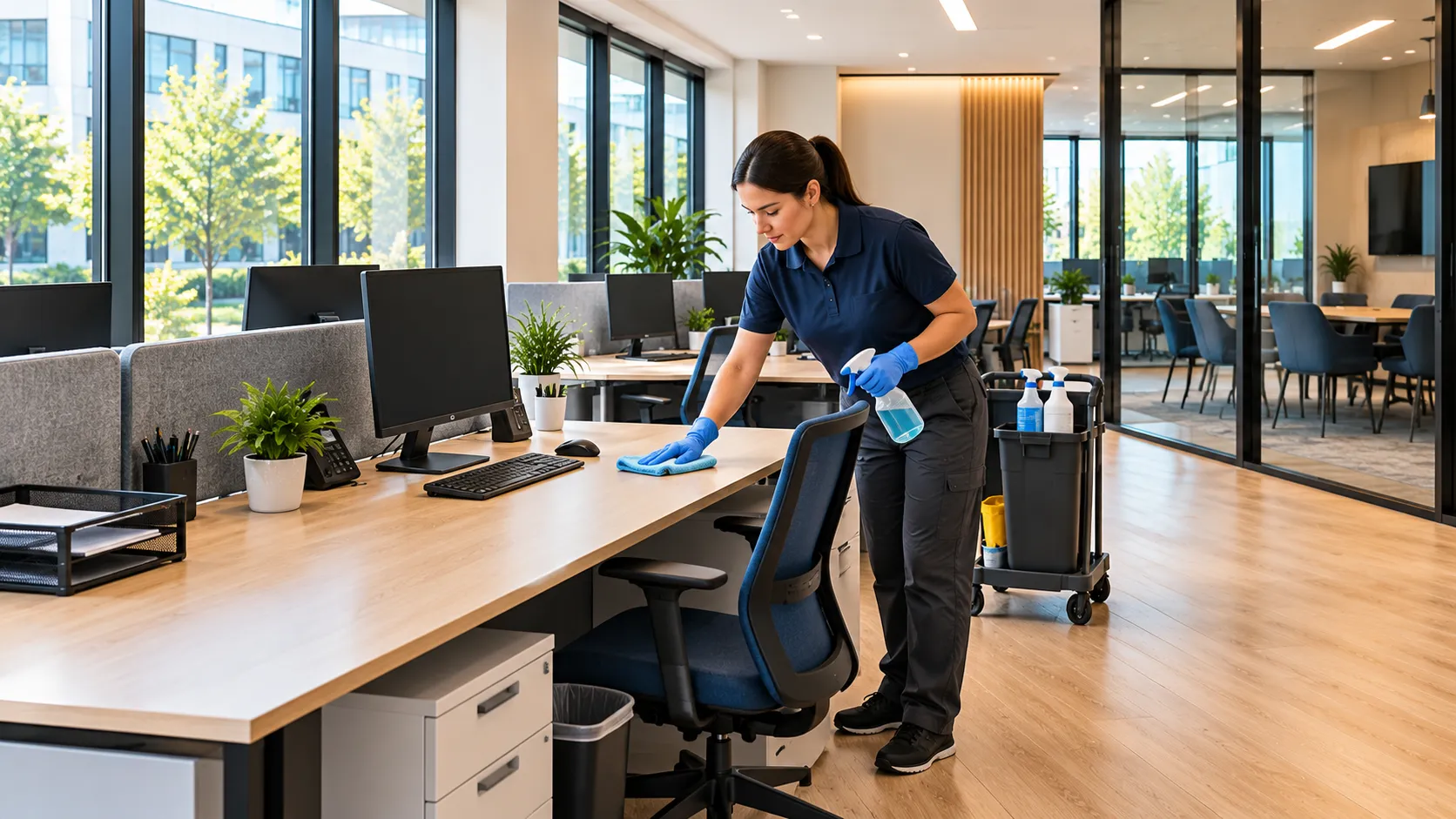
A clean office is more than a pleasant place to work. It reflects your company's professionalism, supports a well-maintained workplace, and creates a positive impression on employees, clients, and visitors. From busy corporate offices to small professional workspaces, consistent office cleaning helps businesses maintain an organized, comfortable, and presentable environment.
Throughout a typical workday, office floors collect dirt, desks accumulate dust, washrooms require attention, and shared spaces experience constant use. Kitchens, meeting rooms, reception areas, and frequently touched surfaces can quickly become difficult to maintain without a structured cleaning routine.
For Canadian businesses, workplace cleaning also involves practical considerations such as seasonal weather, snow and salt tracked indoors during winter, changing occupancy levels, and the specific needs of different commercial facilities. A cleaning plan that works for a small office may not be sufficient for a busy multi-floor workplace.
This is where professional office cleaning becomes valuable. A reliable cleaning provider can establish a consistent routine, address high-traffic areas, maintain washrooms and shared spaces, and schedule services around business operations.
Red and White Cleaning Services provides commercial cleaning solutions for offices and other business facilities across Kitchener, Waterloo, Cambridge, Guelph, Hamilton, London, Brantford, and surrounding communities in Southern Ontario. Businesses can explore the company's commercial cleaning services to learn more about available cleaning options.
In this guide, you'll learn what office cleaning includes, why it matters, how frequently different areas should be cleaned, what professional services may cost, and how to choose a provider that meets your business's needs.
What Is Office Cleaning?
Office cleaning is the systematic cleaning and maintenance of a workplace to remove dirt, dust, waste, and everyday buildup from floors, furniture, washrooms, kitchens, meeting rooms, and other shared areas.
Depending on the workplace, office cleaning can include routine janitorial tasks, detailed surface cleaning, floor care, washroom maintenance, kitchen cleaning, interior glass cleaning, and targeted disinfection of frequently touched surfaces.
The exact scope depends on the size of the office, the number of occupants, operating hours, flooring materials, and the cleaning standards established by the business.
For example, a small office with a few employees may need periodic vacuuming, washroom maintenance, and general dusting. A larger office with frequent visitors, shared workstations, multiple washrooms, and a busy lunchroom may require more frequent professional cleaning.
Office Cleaning vs. Commercial Cleaning
Office cleaning focuses primarily on workspaces such as private offices, corporate suites, meeting rooms, reception areas, and employee common areas.
Commercial cleaning is a broader category that can include offices, retail stores, warehouses, medical facilities, and other business properties.
Many professional cleaning companies provide both services, allowing businesses to select a cleaning plan based on the type of property and the level of maintenance required.
For a business that operates from a conventional office, office cleaning may be the main priority. For a property manager responsible for offices and other commercial units, a broader commercial cleaning plan may be more appropriate.
Office Cleaning vs. Janitorial Services
Although these terms are often used interchangeably, they can describe different arrangements.
Office cleaning typically refers to the actual tasks performed to maintain a clean workspace. Janitorial services may involve ongoing maintenance responsibilities, such as emptying waste bins, replenishing washroom supplies, monitoring shared areas, and maintaining cleanliness throughout the working day.
A business can arrange one-time office cleaning, recurring cleaning visits, or a more comprehensive maintenance contract. The right option depends on the condition of the property and how much day-to-day maintenance the workplace requires.
Why Professional Office Cleaning Is Important
A consistent cleaning routine helps businesses maintain their premises while reducing the burden on employees and administrative staff. Instead of relying on occasional tidying, organizations can establish clear standards for maintaining the entire workplace.
1. Creates a Positive First Impression
Reception areas, entrances, meeting rooms, and glass surfaces often shape a visitor's first impression of a company.
Dusty furniture, overflowing waste bins, stained floors, and neglected washrooms can make an otherwise professional business appear poorly maintained.
Regular office cleaning helps ensure that the workplace looks organized and ready for employees, clients, suppliers, and prospective business partners.
This is particularly important for businesses that welcome customers or conduct meetings on their premises.
2. Supports Workplace Hygiene
Offices contain numerous shared surfaces, including door handles, light switches, kitchen counters, washroom fixtures, and meeting room equipment.
These surfaces require appropriate cleaning as part of a broader workplace hygiene plan. Where necessary, targeted disinfection can provide an additional measure for reducing certain harmful microorganisms.
The Government of Canada's cleaning and disinfecting guidance explains the importance of cleaning and disinfecting shared spaces and frequently touched surfaces.
Cleaning and disinfection are not identical. Cleaning removes visible soil and contaminants, while disinfection uses suitable products to inactivate or destroy specified microorganisms. Surfaces should be cleaned before disinfection when required by the product instructions.
A professional cleaning plan should identify which areas need routine cleaning and which require more frequent attention based on use, workplace procedures, and applicable requirements.
3. Helps Maintain a Comfortable Work Environment
Dust, tracked-in debris, food residue, overflowing bins, and neglected washrooms can make a workplace unpleasant.
Regular office cleaning helps control everyday dirt and keeps common areas more comfortable for employees. Vacuuming, appropriate floor care, and cleaning of horizontal surfaces also help manage dust buildup.
However, cleaning is only one part of maintaining indoor environmental quality. Ventilation, moisture management, building maintenance, and the selection and use of cleaning products also matter.
Health Canada's guidance on improving indoor air quality in office buildings provides additional information for employers and building operators.
4. Protects Workplace Appearance and Materials
Office furniture, carpets, hard floors, glass, and other finishes can deteriorate when dirt and residue are allowed to accumulate.
For example, grit tracked inside can contribute to wear on flooring. Spills can leave stains on carpets, while unsuitable cleaning chemicals may damage certain finishes.
Routine maintenance helps remove abrasive dirt, address spills promptly, and preserve the appearance of workplace surfaces.
The cleaning method should always match the material. Carpet, hardwood, vinyl, laminate, tile, and natural stone may require different products and techniques.
5. Allows Employees to Focus on Their Responsibilities
Employees already have defined responsibilities, and cleaning an entire workplace may not be a practical use of their time.
Assigning professional cleaners to routine maintenance allows staff to focus on their core duties while management maintains a consistent standard of cleanliness.
It can also reduce the need for employees to coordinate supplies, arrange occasional deep cleans, or manage cleaning tasks informally.
The actual benefit depends on the company's existing arrangements, the cleaning scope, and how effectively the service is managed.
6. Supports a More Organized Business Environment
A structured cleaning schedule establishes clear responsibilities for maintaining different parts of the office.
When tasks are documented and completed consistently, it becomes easier to identify neglected areas, manage cleaning supplies, and address recurring problems.
This is especially useful for businesses with multiple departments, shared facilities, or changing occupancy levels.
What Does Professional Office Cleaning Include?
The services included in a professional office cleaning plan vary by provider and contract. Before scheduling a service, businesses should establish exactly which tasks are included, how frequently they will be completed, and whether specialized work costs extra.
General Office and Surface Cleaning
General cleaning focuses on visible dirt and everyday buildup across the workplace.
Common tasks include:
Dusting accessible desks, shelves, furniture, and other agreed surfaces.
Wiping appropriate countertops and shared work areas.
Cleaning reception desks and common-area furniture.
Removing fingerprints and marks from suitable surfaces.
Emptying waste bins and replacing liners where included.
Cleaning accessible light switches and door handles as appropriate.
Tidying shared spaces according to the agreed scope.
Personal desks and workstations should be handled according to the business's privacy and security policies. Employees may need to clear sensitive documents, personal belongings, and equipment before cleaning.
Floor Cleaning and Maintenance
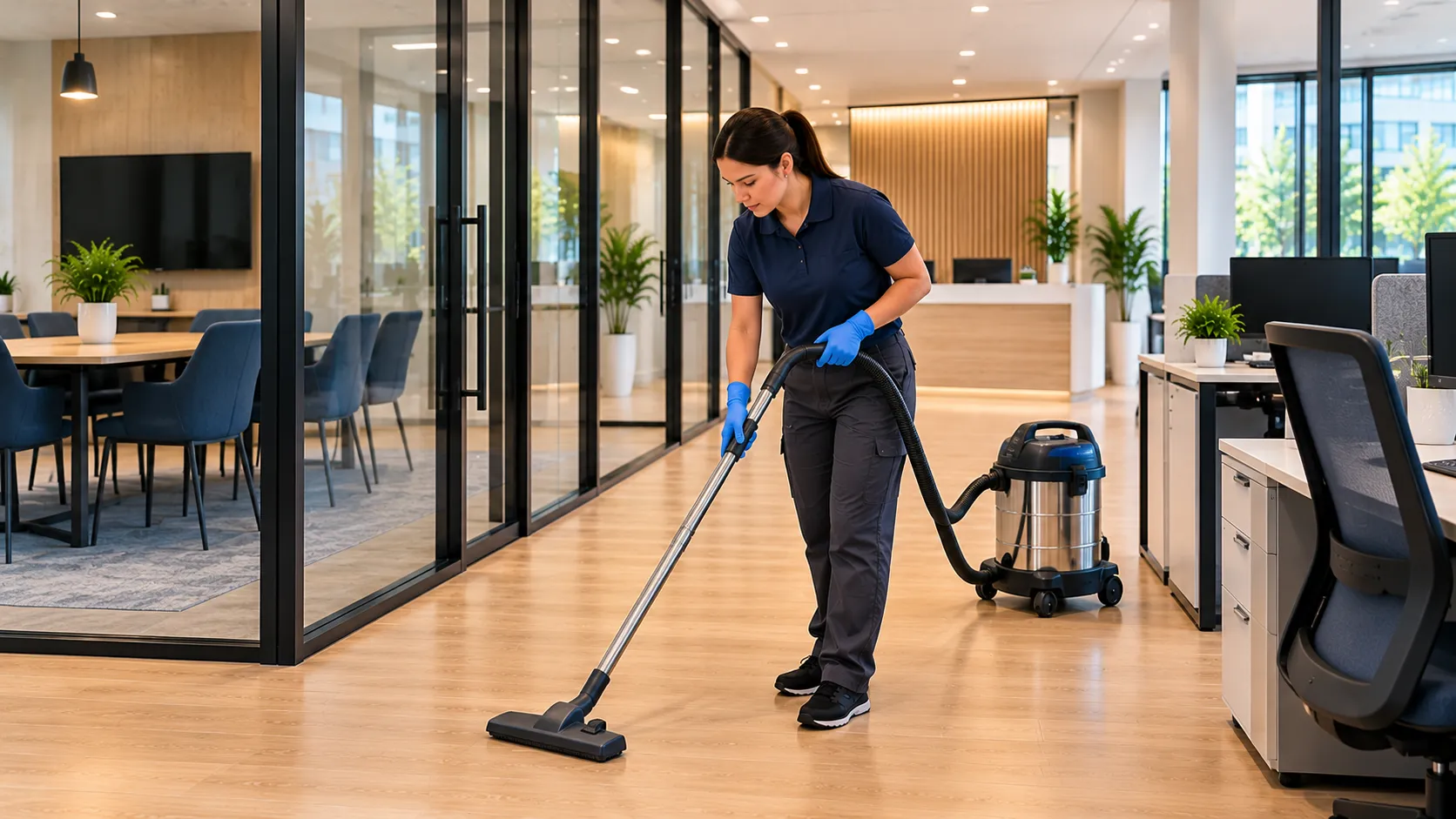
Floors often receive more dirt than other office surfaces because employees and visitors walk across them throughout the day.
A floor care plan may include:
Vacuuming carpets and rugs.
Sweeping or dust-mopping hard floors.
Damp mopping suitable surfaces.
Cleaning entrance mats and high-traffic walkways.
Spot-cleaning accessible marks and spills.
Providing specialized floor care when separately arranged.
In Canadian workplaces, winter conditions can increase the amount of moisture, grit, and road salt entering a building. Entrance mats, regular floor maintenance, and prompt attention to wet areas can help manage this seasonal challenge.
Businesses should select cleaning methods appropria
te for the flooring material and follow the manufacturer's maintenance recommendations.
Washroom Cleaning and Sanitizing
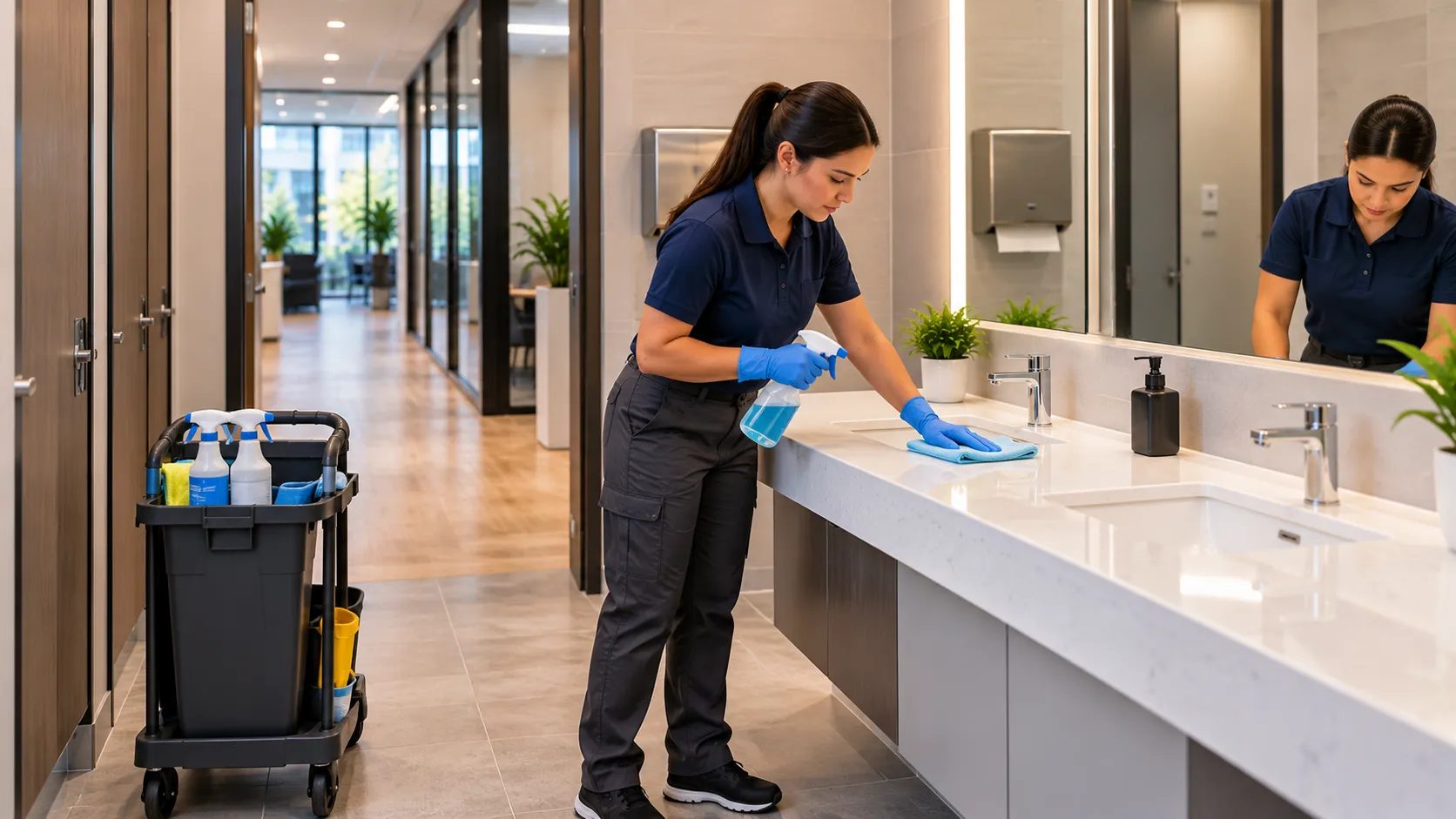
Washrooms require particular attention because they are frequently used and contain multiple fixtures that need regular maintenance.
Depending on the agreement, professional washroom cleaning may include:
Cleaning and disinfecting toilets and urinals as appropriate.
Cleaning sinks, faucets, and countertops.
Wiping mirrors and accessible fixtures.
Cleaning floors and removing visible residue.
Emptying waste bins.
Replenishing toilet paper, soap, and paper towels when supplies are included.
Checking for visible maintenance concerns, such as leaks or persistent odours.
The frequency should reflect occupancy and actual usage. A busy office washroom may require daily attention, while a smaller, lightly used facility may need a different schedule.
Office Kitchen and Lunchroom Cleaning
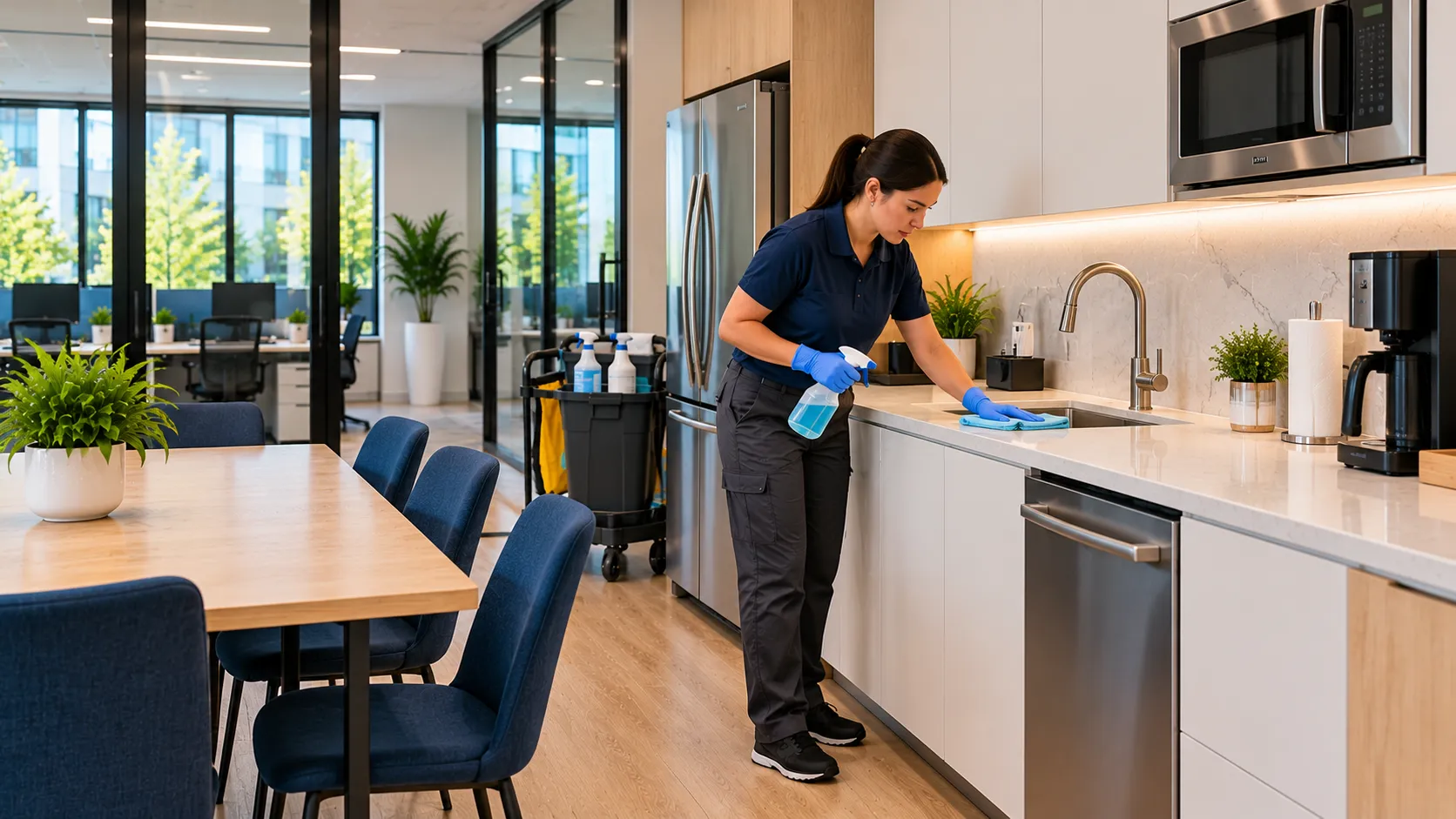
Shared kitchens can quickly accumulate food residue, spills, grease, and unpleasant odours.
A kitchen cleaning routine may cover:
Cleaning countertops and suitable food-preparation surfaces.
Wiping sinks and faucets.
Cleaning the exterior of refrigerators and other appliances.
Wiping microwave interiors when included and safe to clean.
Removing food-related waste.
Cleaning tables and shared dining surfaces.
Sweeping and mopping floors.
Cleaning cupboard exteriors and other agreed surfaces.
Employees should store food properly, dispose of expired items according to workplace procedures, and avoid leaving spills unattended.
Deep cleaning of appliance interiors, refrigerators, ovens, or heavily soiled areas may require a separate arrangement.
Meeting Room and Reception Cleaning
Meeting rooms and reception areas are among the most visible spaces in an office.
Cleaning may include wiping tables, cleaning accessible surfaces, removing waste, vacuuming floors, and addressing fingerprints on interior glass.
Shared equipment should be cleaned using methods suitable for the device. Screens, keyboards, conference systems, and other electronics can be damaged by inappropriate liquids or chemicals.
For workplaces with frequent client meetings, a quick inspection of these areas before business hours can help maintain a consistently professional appearance.
Interior Glass and Window Cleaning
Interior glass partitions, doors, and windows can collect fingerprints, dust, and smudges.
Routine interior glass cleaning helps maintain visibility and presentation. However, high exterior windows, difficult-to-access glazing, and specialized glass restoration may require separate equipment, expertise, or pricing.
Confirm whether interior glass is included in the regular cleaning agreement rather than assuming all window cleaning is covered.
High-Touch Surface Cleaning and Disinfection
High-touch areas may include door handles, handrails, light switches, shared counters, and frequently used equipment.
A suitable routine should identify the surfaces that need attention and determine whether cleaning alone is sufficient or disinfection is appropriate.
When disinfectants are used, follow the product label, including the required contact time and surface compatibility. In Canada, choose an appropriate authorized product and check its label for the intended use.
Never mix cleaning chemicals, and ensure cleaners follow relevant safety procedures.
How Often Should an Office Be Cleaned?
There is no single schedule that suits every workplace. The appropriate frequency depends on the number of occupants, visitor traffic, business activities, the presence of shared facilities, and the cleaning standard required.
The following table provides a starting point for planning. It is not a substitute for assessing the actual needs of your facility.
Recommended Cleaning Frequencies by Area and Task
Waste removal: Daily or as needed (Consideration: Bin capacity and food waste)
Reception and entrance: Daily or as needed (Consideration: Visitor traffic and weather)
Washrooms: Daily or more frequently (Consideration: Occupancy and usage)
Kitchen counters and shared tables: Daily or after use (Consideration: Food preparation and spills)
High-touch surfaces: According to risk and usage (Consideration: Workplace procedures)
Hard-floor maintenance: Daily or several times weekly (Consideration: Foot traffic and floor type)
Carpet vacuuming: Several times weekly or daily (Consideration: Dust, traffic, and occupancy)
General surface dusting: Weekly or as needed (Consideration: Dust accumulation)
Interior glass: Weekly or periodically (Consideration: Fingerprints and presentation)
Detailed floor maintenance: Periodically (Consideration: Floor material and condition)
Deep cleaning: Periodically or when needed (Consideration: Buildup, renovations, and special events)
Daily Office Cleaning
Daily cleaning is often appropriate for high-traffic offices and workplaces with shared washrooms, kitchens, and reception areas.
Typical priorities include waste removal, washroom maintenance, cleaning shared kitchen surfaces, addressing visible spills, and maintaining heavily used floors.
Daily service may not require a complete top-to-bottom cleaning of every desk or room. Instead, the routine can focus on essential maintenance while less frequently needed tasks are scheduled separately.
Weekly Office Cleaning
Weekly service may suit smaller offices with lower occupancy, limited visitor traffic, and employees who maintain their individual work areas.
The cleaning plan might include thorough vacuuming, surface dusting, washroom cleaning, kitchen maintenance, waste removal, and interior glass touch-ups.
However, shared facilities and heavily used areas may still require attention more frequently than once a week.
Biweekly or Monthly Cleaning
Biweekly or monthly cleaning may be suitable for certain lower-traffic facilities or offices that have an established in-house maintenance routine.
These arrangements should not be selected based on price alone. Businesses must consider whether the proposed frequency can maintain acceptable cleanliness between visits.
Monthly service may work as supplemental professional maintenance for some spaces, but it may be insufficient for busy offices with shared kitchens and washrooms.
When to Schedule Deep Cleaning
Deep cleaning is useful when routine maintenance is no longer enough to address accumulated grime or when the space needs a more comprehensive reset.
Consider arranging a deep clean:
After office renovations or construction.
Before moving into a new commercial space.
After a large meeting or corporate event.
When carpets, floors, or neglected surfaces need additional attention.
Before an important client visit or property inspection.
When returning a leased office to the landlord, subject to the lease requirements.
Deep cleaning services are generally a supplement to routine office cleaning rather than a replacement for it.
How to Create an Effective Office Cleaning Checklist
A written cleaning checklist helps management, employees, and cleaning providers understand the expected standard.
Rather than using a generic checklist for every workplace, divide the office into specific zones and assign tasks according to actual use.
Reception and Entrance Checklist
Remove waste and visible debris.
Clean appropriate reception surfaces.
Vacuum entrance mats or clean them according to the material.
Maintain clean, safe walkways.
Address fingerprints on accessible glass.
Check for tracked-in moisture, grit, or salt.
Workstation and Office Checklist
Dust accessible furniture and surfaces.
Vacuum carpets or maintain hard floors.
Empty waste bins according to the agreed schedule.
Clean shared tables and appropriate contact surfaces.
Remove visible marks from suitable surfaces.
Respect personal belongings and confidential documents.
Washroom Checklist
Clean and disinfect designated fixtures as appropriate.
Clean sinks, countertops, and mirrors.
Maintain floors and remove visible residue.
Empty waste bins.
Replenish agreed supplies.
Report leaks, damage, or persistent odours.
Kitchen and Break Room Checklist
Clean counters, sinks, and shared tables.
Address spills and food residue.
Empty waste and recycling containers.
Clean appliance surfaces according to the agreement.
Maintain floors.
Report maintenance issues.
Meeting Room Checklist
Clean tables and shared surfaces.
Remove waste and used disposable items.
Vacuum or mop floors as appropriate.
Clean visible fingerprints from suitable glass.
Check high-touch surfaces.
Leave the room ready for its next scheduled use.
How to Use the Checklist Effectively
A checklist is most useful when it identifies the task, the frequency, the responsible person, and the method for verifying completion.
For recurring professional cleaning, businesses can agree on a documented scope of work and use periodic inspections to identify missed tasks or areas that need additional attention.
The objective is not simply to complete a list. It is to maintain a consistent cleaning standard over time.
Professional Office Cleaning vs. In-House Cleaning
Businesses can maintain their premises through employees, an in-house cleaning team, a professional contractor, or a combination of these options.
The right choice depends on the organization's size, operating model, budget, and cleaning requirements.
In-House Cleaning vs. Professional Cleaning Service Comparison
Staffing: In-house requires internal responsibility for staffing, whereas a professional service manages its assigned cleaning personnel.
Equipment and supplies: In-house involves internal purchasing and management, whereas for professional services, availability depends on the agreement.
Scheduling: In-house is controlled directly by the business, while professional services are arranged directly with the provider.
Task coverage: In-house depends on available staff and training, whereas professional services are defined in a structured service scope.
Quality monitoring: In-house quality is managed internally, whereas professional services share oversight through inspections and agreed standards.
Specialized tasks: In-house may require additional equipment or expertise, while professional services can arrange specialized tasks when offered by the provider.
Cost structure: In-house includes direct labour, supplies, equipment, and management overhead, while professional services are usually priced on the agreed scope and schedule.
When In-House Cleaning Makes Sense
In-house cleaning can be practical for small businesses that need only light maintenance or already employ facilities staff.
It also provides direct control over schedules, task assignments, and workplace-specific procedures.
However, the business remains responsible for ensuring that cleaning tasks are completed consistently and safely.
When Professional Office Cleaning Makes Sense
Professional cleaning may be a better fit when the workplace needs dependable recurring service, specialized floor care, detailed washroom maintenance, or cleaning outside normal operating hours.
A contractor can establish a defined scope of work and schedule visits around the business's needs.
For example, Red and White Cleaning Services offers commercial cleaning for offices and other commercial properties, with scheduling options designed to accommodate business operations. Explore its commercial cleaning solutions to review the service details.
Before selecting a provider, compare the full scope of service rather than relying on a general promise to clean the office.
How Much Does Office Cleaning Cost in Canada?
The cost of office cleaning in Canada varies by location, building size, cleaning frequency, required tasks, and the condition of the property.
There is no reliable single price that applies to every office. A small, lightly used office with simple flooring will usually have different requirements from a multi-floor workplace with several washrooms, extensive glass, and a busy lunchroom.
For this reason, requesting a quote based on the actual property is generally more useful than relying on a generic online estimate.
Factors That Affect Office Cleaning Prices
1. Office size
Larger offices generally require more labour and time. However, the layout and density of furniture can also influence the amount of work involved.
2. Cleaning frequency
Daily service, several visits per week, weekly maintenance, and monthly cleaning involve different scheduling and labour requirements.
A recurring contract may provide a more predictable arrangement, but pricing depends on the agreed scope and commercial terms.
3. Current condition
A well-maintained office is different from a property that has accumulated dirt, stains, grease, or neglected buildup.
Initial deep cleaning may be necessary before routine maintenance can begin.
4. Number of washrooms and kitchens
Washrooms and food-related areas require specific cleaning procedures and may need more frequent attention than general office areas.
5. Flooring and furniture
Carpet extraction, specialized floor treatment, and cleaning delicate materials may involve additional time or equipment.
6. Operating hours
Evening, early-morning, weekend, and other scheduling requirements may affect the quote, depending on the provider's arrangements.
7. Additional services
Interior glass cleaning, detailed floor care, carpet cleaning, and post-renovation cleaning may be priced separately.
How to Request an Accurate Office Cleaning Quote
To receive a useful quote, provide the cleaning company with:
The office address or service location.
Approximate square footage.
Number of employees or regular occupants.
Number of washrooms and kitchens.
Current condition of the space.
Required cleaning frequency.
Preferred service hours.
Any specialized cleaning requirements.
Ask the provider to clarify what is included, what costs extra, and how additional work is approved.
A transparent quote makes it easier to compare providers fairly and avoid unexpected charges.
Businesses in Southern Ontario can contact Red and White Cleaning Services for a commercial cleaning quote.
How to Choose the Best Office Cleaning Company in Canada
Choosing a cleaning provider involves more than comparing prices. The company should understand the property's requirements, communicate clearly, and have a workable plan for maintaining the agreed cleaning standard.
1. Confirm the Service Area
Before discussing the full scope of work, confirm that the provider serves your location.
For example, Red and White Cleaning Services focuses on Kitchener, Waterloo, Cambridge, Guelph, Hamilton, London, Brantford, and surrounding Southern Ontario communities.
Businesses outside these areas should confirm availability directly rather than assume that coverage extends throughout Canada.
2. Review the Scope of Work
Ask for a written list of included tasks.
A quote that covers general cleaning may not include carpet extraction, exterior windows, high-level dusting, or deep cleaning of appliances.
The scope should identify the frequency of each task and any exclusions.
3. Ask About Training and Insurance
Cleaning personnel may work around expensive equipment, confidential information, and different surface materials.
Ask whether the company carries appropriate insurance, trains its staff, and follows relevant workplace safety procedures.
If cleaners require access to restricted areas, discuss access controls, key handling, alarm procedures, and confidentiality expectations.
4. Check Scheduling Flexibility
A good cleaning schedule should fit the business's operating hours.
Some offices need service after employees leave, while others prefer early-morning or weekend cleaning.
Confirm the available times and agree on how schedule changes, holidays, and urgent requests will be handled.
5. Understand Quality Control
Ask how the provider checks its work and responds to concerns.
Useful arrangements may include documented checklists, regular inspections, a designated contact person, and a process for correcting missed tasks.
A clear quality-control process is more valuable than an unsupported promise that every visit will be perfect.
6. Compare Quotes Fairly
Request comparable quotes from shortlisted providers.
Check the estimated labour, visit frequency, included tasks, supply arrangements, additional fees, and contract terms.
The lowest quote may not represent the best overall value if important cleaning tasks are excluded or the proposed frequency is insufficient.
7. Read the Contract Before Signing
A recurring cleaning contract should explain the service scope, price, billing arrangements, cancellation terms, access responsibilities, and procedures for handling additional work.
For longer agreements, clarify how changes in occupancy or cleaning requirements affect the schedule and price.
A well-defined agreement helps both parties understand their responsibilities.
Why Businesses May Choose Red and White Cleaning Services
When evaluating a provider, businesses should look for relevant commercial cleaning experience, examples of completed cleaning projects, clear communication, appropriate scheduling, and a service plan tailored to the property.
Red and White Cleaning Services LTD serves commercial clients across Kitchener, Waterloo, Cambridge, Guelph, Hamilton, London, Brantford, and surrounding areas of Southern Ontario.
Its commercial cleaning offering covers a range of business properties, including offices, warehouses, retail spaces, and other commercial facilities.
Cleaning Arranged Around Business Operations
Cleaning should support the workplace rather than disrupt it.
Red and White Cleaning Services offers scheduling options that can include evenings, early mornings, and weekends, subject to the agreed arrangement.
This can be useful for businesses that prefer cleaning to take place outside their main operating hours.
Cleaning Plans for Different Commercial Spaces
Different properties have different cleaning needs. A small professional office may prioritize floors, desks, washrooms, and the kitchen, while a larger commercial facility may require a broader maintenance plan.
A discussion about the property's size, occupancy, condition, and operating hours helps establish an appropriate scope of work.
Recurring Cleaning and Maintenance
Businesses that need consistent upkeep can discuss ongoing maintenance cleaning arrangements rather than arranging each visit separately.
The appropriate schedule depends on traffic, usage, and the agreed cleaning requirements.
How to Get Started
If your business is looking for professional office cleaning in Southern Ontario, you can review the company's commercial cleaning services or visit the contact page to discuss your requirements.
When requesting a quote, explain the size of your office, the areas that need attention, and how frequently you want the space cleaned. This information helps the provider determine whether its services fit your needs.
Office Cleaning Best Practices for Canadian Workplaces
An effective cleaning program combines regular maintenance, suitable products, safe working procedures, and attention to the building's specific requirements.
Account for Seasonal Conditions
Canadian winters can introduce snow, moisture, grit, and road salt into office buildings.
Businesses can reduce the resulting mess by maintaining entrance mats, inspecting entryways regularly, and arranging appropriate floor cleaning during periods of heavy traffic.
Wet floors should be managed promptly, and any temporary cleaning-related hazards should be clearly identified.
Use Appropriate Cleaning Products
Not every cleaning product is suitable for every surface.
Follow manufacturer instructions, check product labels, and consult safety data sheets when required.
Products should be stored securely, and cleaning chemicals should never be mixed unless the manufacturer explicitly specifies a safe procedure.
Where disinfection is necessary, select an appropriate product authorized for its intended use in Canada.
Protect Indoor Air Quality
Cleaning practices can affect indoor environmental quality, particularly when products release irritating substances or carpets remain damp after cleaning.
Use products appropriately, provide suitable ventilation where practical, and follow instructions for equipment and chemical use.
Carpet cleaning should be planned to allow sufficient drying. Health Canada's office indoor air quality guidance provides further recommendations on cleaning practices and other factors that affect indoor air quality.
Cleaning alone cannot correct every indoor air quality problem. Persistent moisture, unusual odours, ventilation concerns, or suspected building-related contamination may require investigation by qualified professionals.
Establish Clear Employee Responsibilities
Professional cleaners cannot maintain every area effectively if the workplace is consistently left cluttered or if employees do not follow agreed procedures.
Businesses can encourage staff to:
Dispose of food waste promptly.
Keep walkways clear.
Report spills and maintenance problems.
Store personal items appropriately.
Secure confidential documents.
Follow workplace rules for shared kitchens and meeting rooms.
These simple practices complement professional cleaning without transferring the entire cleaning responsibility to employees.
Maintain a Written Cleaning Schedule
Documented schedules help businesses identify which tasks are completed daily, weekly, periodically, or when needed.
They also make it easier to respond when occupancy changes or an area begins to require additional attention.
Review the schedule periodically and adjust it when the workplace expands, changes its operating hours, or experiences a significant change in usage.
Common Office Cleaning Mistakes to Avoid
Even businesses that arrange regular cleaning can experience inconsistent results when important details are overlooked.
Cleaning Only Visible Areas
A tidy reception area does not necessarily mean the entire office is properly maintained.
Washrooms, kitchen surfaces, shared equipment, corners, and less frequently used areas also need appropriate attention.
A documented scope helps prevent the cleaning routine from focusing exclusively on what visitors can see.
Using the Same Cloth Everywhere
Using one cloth across unrelated surfaces can transfer dirt and contaminants.
Cleaning staff should follow suitable procedures for separating cloths, changing them when necessary, and avoiding cross-contamination between washrooms, kitchens, and other areas.
Ignoring Product Instructions
Using too much product does not automatically improve cleaning results.
Incorrect dilution, incompatible chemicals, insufficient contact time, or unsuitable application methods can reduce effectiveness and potentially damage surfaces.
Follow the manufacturer's instructions and applicable safety procedures.
Choosing a Cleaning Schedule Based Only on Price
A low-cost service may not provide sufficient visits or include the tasks the workplace requires.
Before selecting a provider, assess the likely workload, essential hygiene needs, and areas that need frequent attention.
The objective is to establish an affordable plan that maintains an acceptable standard, not simply to minimize the number of visits.
Failing to Review Service Quality
Cleaning needs can change over time. A schedule that worked when the office had ten employees may be inadequate after the team expands.
Regular communication and occasional inspections help identify issues early and allow the cleaning plan to be adjusted.
Frequently Asked Questions About Office Cleaning
What Does Office Cleaning Usually Include?
Office cleaning typically includes dusting accessible surfaces, vacuuming carpets, cleaning hard floors, emptying waste bins, maintaining washrooms, and cleaning kitchens and shared spaces. Depending on the agreement, it may also include interior glass cleaning, targeted disinfection, and specialized floor care.
Always confirm the exact scope with the provider before booking.
How Often Should an Office Be Professionally Cleaned?
The appropriate frequency depends on office size, occupancy, visitor traffic, and the use of shared facilities.
Busy offices may require daily cleaning, while smaller workplaces may benefit from weekly or biweekly service. Washrooms, kitchens, and high-traffic areas may need attention more frequently than other parts of the building.
A cleaning assessment can help determine a suitable schedule.
How Much Does Office Cleaning Cost in Canada?
Office cleaning prices vary by location, property size, cleaning frequency, building condition, and the tasks included.
Additional services such as carpet extraction, detailed floor care, or deep cleaning may affect the total cost.
For an accurate estimate, request a quote based on your office's actual requirements.
Is Professional Office Cleaning Worth It for a Small Business?
It can be worthwhile when cleaning tasks take employees away from their core responsibilities or when the business needs a consistent standard of cleanliness.
Small businesses can begin with a limited scope covering essential areas and adjust the frequency as occupancy and cleaning needs change.
The decision should be based on the time, resources, and level of maintenance the business requires.
What Is the Difference Between Regular Cleaning and Deep Cleaning?
Regular cleaning focuses on maintaining cleanliness through recurring tasks such as vacuuming, dusting, waste removal, and washroom maintenance.
Deep cleaning involves more detailed work on accumulated dirt and areas that routine cleaning may not address thoroughly.
Deep cleaning may be appropriate after renovations, before occupancy, or when a space needs a more comprehensive reset.
Can Office Cleaning Be Scheduled After Business Hours?
Many professional cleaning providers offer evening, early-morning, or weekend appointments, depending on their availability and the agreement.
After-hours cleaning can reduce disruption to employees and visitors.
Businesses should establish clear access arrangements, security procedures, and instructions for locking up the premises.
What Should I Look for in an Office Cleaning Company?
Look for a provider with a suitable service area, a clearly defined scope of work, appropriate insurance, trained personnel, transparent pricing, and a reliable process for handling concerns.
It is also important to confirm scheduling options, supply arrangements, and any additional fees before signing a contract.
Does Office Cleaning Include Disinfection?
Not necessarily. Routine cleaning and disinfection are different activities.
Some cleaning plans include targeted disinfection of designated surfaces, while others provide it as an additional service. The correct approach depends on the workplace, its procedures, and the surfaces involved.
Confirm which products and methods are used and whether they are suitable for the intended purpose.
Does Red and White Cleaning Services Offer Office Cleaning in Southern Ontario?
Red and White Cleaning Services provides commercial cleaning for offices and other business facilities across Kitchener, Waterloo, Cambridge, Guelph, Hamilton, London, Brantford, and surrounding Southern Ontario communities.
Businesses can review its commercial cleaning service information or contact the company to confirm service availability and request a quote.
How Can I Get a Quote for Office Cleaning?
Start by providing your office location, approximate size, required cleaning frequency, and a list of the areas that need attention.
Ask for a written quote explaining the included tasks, scheduling arrangements, and any additional charges.
To discuss commercial cleaning requirements with Red and White Cleaning Services, visit its contact page.
Build a Cleaner Workplace With the Right Office Cleaning Plan
Office cleaning is an important part of maintaining a professional and comfortable workplace. From daily waste removal and washroom maintenance to floor care and periodic deep cleaning, a well-planned routine helps businesses manage everyday dirt and maintain their premises.
The most effective cleaning plan is not necessarily the one with the most frequent visits or the longest task list. It is the plan that matches the property's actual needs, addresses high-use areas appropriately, and maintains consistent standards within the available budget.
For Canadian businesses, seasonal conditions, workplace occupancy, product safety, and indoor air quality should also be considered when developing a cleaning routine.
Choosing the right provider starts with understanding your space, comparing clearly defined services, and agreeing on a realistic schedule.
If your business operates in Kitchener, Waterloo, Cambridge, Guelph, Hamilton, London, Brantford, or the surrounding areas of Southern Ontario, Red and White Cleaning Services can be a starting point for exploring commercial cleaning options suited to your property.
Ready to discuss your office cleaning needs? Visit the Red and White Cleaning Services contact page to request a quote and discuss a cleaning plan for your workplace.
A cleaner office begins with a clear plan, realistic expectations, and a consistent approach to maintaining the space your team and clients use every day.